Thursday, March 29, 2018

Why I would move to Taiwan in the future


They recycle, and the garbage trucks play music like ice-cream trucks.  Taiwanese people wait until they hear the music and then run outside to toss their trash into the truck as it slowly drives through their neighborhood.  It also fosters a sense of community, because neighbors bang on each other’s doors as the truck comes by.

Hiking Elephant Mountain at sunse

They have a woman president.

The subways in all the cities are unreal:
a) there’s eerie music that sounds like Mario Galaxy whenever a train is approaching,
b) there’s no eating or drinking at all on the subway,
c) people actually queue up while waiting for the subway,
d) I once saw a teenage boy spill water on the ground in a subway station and then get on his hands and knees to wipe the floor clean.

The people are so hospitable, just like the Chinese.

They read books "backwards" with the spine on the right.

There are so many tiny pet dogs that people take everywhere in backpacks or baby carriages.

They wear seatbelts (imagine my shock after a summer of no seatbelts at all, when my first taxi driver in Taiwan had to tell me to buckle up or he’d get fined).

Tainan University
The whole country is an island.

Like in China, it would be totally acceptable for me to carry around an umbrella to protect from the sun.

Also like in China, the fashion style is really anything goes.  The most typical Chinese outfit is definitely a T-shirt underneath spaghetti-strap top with attached gaucho pants and platform sandals.

I saw a blood drive happening in one of the plazas, and I took it as an auspicious sign.

The night markets are amazing: pastries, barbecue, desserts, noodles, fortune tellers, clothes, jewelry, electronics, and knickknacks for sale, masseuses, and one white guy selling chocolate chip cookies behind a sign that says “Joy’s Homemade Treats.”

Living right above edge of Shilin Night Market (the biggest in Taipei)
Everyone rides mopeds.

The whole country has free wifi (like London).

Hardly anyone smokes compared to China (but a fair amount smoke compared to the US).

The food is unparalleled, but I do have an obsession with all Asian food.

There’s tons of vegetarian/vegan restaurants.

They’re more or less accepting of gay people.

I’ll be able to easily travel to all the fabulous countries of Southeast and East Asia.

On the steps in front of Chiang Kai-Shek Memorial Hall

Tuesday, March 27, 2018

Return to Taiwan


For Spring Break, I spent the last two weeks in Taiwan with my boyfriend and a team of three other Yalies.  He and I got a grant from the Yale International Relations Association to lead a trip to investigate public health and environmental issues.  I had been eager to go back to Taiwan, and the grant allowed me to go to new places like Lanyu (Orchid) Island, Tainan, and Taitung.

Flying fish were painted everywhere
The first Tuesday, we took the ferry to Lanyu Island, which is almost entirely populated by Tao/Yami people.  From the deck, we saw a lot of dolphins and flying fish!  I had just studied flying fish in my bio lab so it was really exciting to see.  We thought they were birds at first, but after about 30 seconds of flying above the water they would renter a wave.  Little did we know that on Lanyu they are considered gods, and the entire culture is structured around fishing them.  The fishing season has just begun with a festival that started in one village and passed from village to village around the island as each took its turn celebrating the beginning of fishing.  For the first month, only a specific type of canoe (called tatala) that seats 10 people is allowed in the waters.  The tatala is different from other indigenous groups’ hallowed-out canoes in that it is made of 27 assembled pieces of wood.  The second month 1- and 2-person canoes are allowed to join the others in fishing, and the third month motorboats are allowed too.  Every man on the island fishes, even in modern times.  Each household has at least one fish skin hanging near the entrance.


We originally came to learn more about the dispute between the Taiwanese government and the local people about a nuclear waste facility that was built on the island.  The locals say they were lied to about what the government was building, and that it has since affected the fish population and caused increasing cancer rates among residents.


The island felt a lot like Hawaii to me, and it turns out they are on nearly the same latitude.  Everyone there says hello to each other when they pass on motorbikes or in cars, and that’s included us.  We’ve done several long, beautiful, painful hikes and bike rides on the one road that circles the island and on the one mountain pass that bisects the island.  We watched the sunset from the “grassy grasslands” on the southern tip.


We got a private tour of the little museum from the director of the Lanyu Foundation, and saw the traditional houses.  The houses have three parts: one underground to protect from typhoons, one above ground to host guests from other tribes—or for the men to sleep in when it’s fishing season because they aren’t allowed to sleep near or be distracted by the women, and another above ground and very open for communal living during the summer months.


Wednesday, January 31, 2018

England & Canada

My family spent a week together in London at the end of 2017.  We rang in the New Year with the crowds in Trafalgar Square, where we could see and hear Big Ben.  That was right after dinner and dessert in Chinatown in Soho, which was my favorite area of the city.


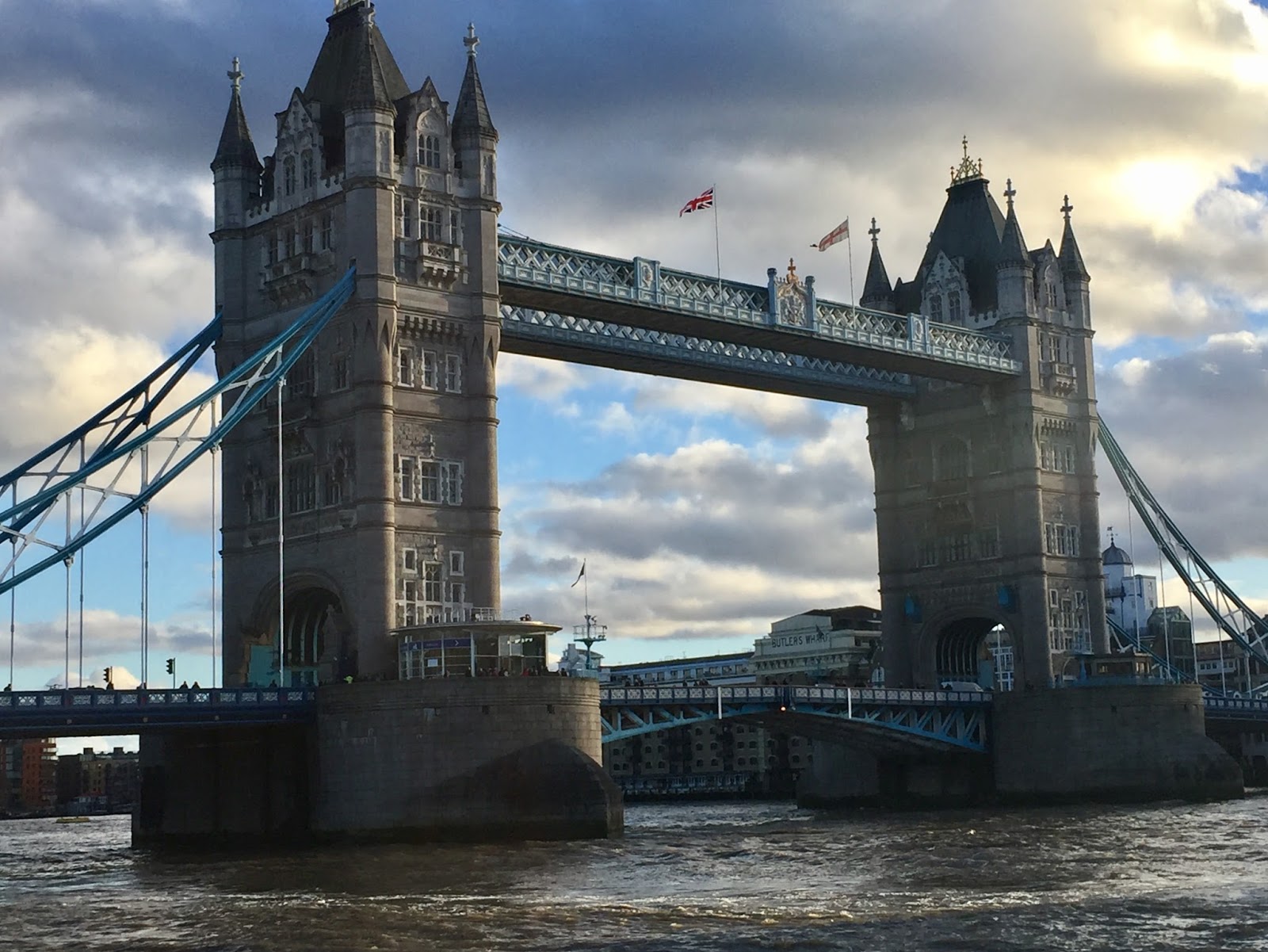
Tower Bridge outside Tower of London where we saw the Crown Jewels

In the maze outside Hampton Court Palace (residence of Henry VIII)
V&A Museum (of decorative arts and design)

Enjoying the Japanese food of London
Tate Modern

Rosetta Stone in the British Museum
Roman baths in Bath
After riding the London Eye
Stonehenge (VERY windy)

After London, I spent a week skiing with other Yalies at Mont Tremblant in the fabulous francophone Canadian province of Quebec.  I'd been to Quebec, Montreal, and Mont Tremblant before with my family--and I ate at the same crepe place again this time.  One the way back, I entered the United States by car for the first time ever.  It was as easy as going through a toll booth, but free.

Friday, December 8, 2017

Video + Photo from Last Summer

I made a video of last summer by taking one-second snippets from everyday and mashing them together -- of course it ends prematurely when my phone broke.


If you want to compare to my video from the summer before, which also ended with a broken phone:


Finally, one of my photos won a Yale travel photography contest!  Here is a calendar for download that features my photo:
https://cipe.yale.edu/sites/default/files/files/2018_CIPE_Calendar.pdf

Monday, August 21, 2017

Setbacks

Now that I'm back in the country, I can say this summer seemed even better than the last.  The traveling was easier, and the places and people were fantastic.  Packing in a carryon backpack was a great choice.

Wear the dupatta Kashmiri-style
Wiping out while running and destroying my phone.  I think I would've rather broken an arm, but here's to another summer of solo international travel without any phone.  I got covered in scrapes but eventually managed to sew up all the holes in my leggings.

Dropping the entirety of my anti-malarial pill collection into the sink.  When I fished them all out they'd turned from a nice pink color to an acid yellow color.  At this point I decided maybe I should start actually using my mosquito net above my bed at night.

Simultaneous upper and lower GI infections.  It's really been bound to happen since I try absolutely everything Ugandan street vendors have to offer.  The worst part was not having an appetite for over a week and feeling like I was losing all my muscle mass.

Losing my yellow fever vaccine certificate before entering the country where it's required.  To enter Uganda, one must present the certificate as proof of vaccination of yellow fever.  Sometime between Toronto and Entebbe, I stashed mine in my passport and then lost it.  My first introduction to the country was convincing the health officer on the tarmac to let me in regardless.  (To my relief he was so convinced, and I did not have to pay to be revaccinated in the airport.)

Swimming in the Nile where there's schistosomiasis.  It was totally worth it.  I bought the anti-parasite medicine while still in Uganda, because it was incredibly cheap so hopefully it's not counterfeit.

Forgetting to apply for my Indian visa.  Instead of applying the minimum 3 days prior to entry, I applied the night before.  To board the plane out of Uganda, I had to pull out my laptop to convince the attendant that I had at least applied for the visa.  When I got to the immigration officer's counter in India, I had no idea if it had been accepted yet or not.

Sunday, August 13, 2017

Pahalgam


My last weekend in Kashmir, we drove 2.5 hours from the city of Srinagar to the mountains.  We stayed in a lovely hotel, rode horses, and went to a mini amusement park in the town of Pahalgam.  This would be the third time I've galloped on horse abroad with no helmet and no idea what I was doing.  Pahalgam had cool and fresh air, how all the Kashmiris said Srinagar used to be before climate change.  It was amazing to me that all the women in Kashmir, whether in the villages or the cities wore traditional style clothes.  (Men wear pants and t-shirts all over the worldactually jeans are considered really fancy in India.)  Only the well-off, young people might wear Western style clothes when they go to the mall or a restaurant, but not even on the street.
Our driver, Ayub


Thursday, August 10, 2017

Koshur

On a shikara ride at Dal Lake,
there's also a lot of lush houseboats on the lake
Mr. Wonderful Flowerman


Kashmir is the most militarized country I have ever visited.  Every tenth car is an imposing military truck, and we would’ve had to stop at checkpoints along every road if my friend hadn’t had relatives in the government.  (Kashmir life runs on knowing the right people.)  The security was getting extra stringent as the anniversary of India’s independence, August 15th, approached.  For Kashmiris, this marks the day in 1947 that they lost their independence.  Throughout British colonial times, Kashmir had remained a fairly independent princely state.  They were majority Muslim but ruled by Hindus.  In 1947, as an unsatisfying solution to the claims of Muslims and Hindus, Britain split its territories into a majority Hindu India and a majority Muslim Pakistan.  Pakistan originally consisted of two parts on either side of India, but the poorer, eastern part later became an independent Bangladesh.  Kashmir, situated between India and Pakistan, wanted to keep its independence, and for that it has been the site of the longest continuous violent conflict in the world.  Pakistan, India, and China all lay claims to Kashmir.  The portion that Pakistan managed to control has to a great extent assimilated into Pakistani culture.  However, the “India-occupied” area retains more of its Kashmiri identity.  As they told me, they are friendly to the Hindu people, but they hate the government.  The Indian government made Jammu and Kashmir one state so that the Jammu Hindu-majority would weaken the voting bloc of the Muslim-majority Kashmir.  Most people there speak Kashmiri, but they learn Urdu/Hindu in school (the same spoken language, but different written scripts).  The Indian government refuses to invest in Kashmiri infrastructure, government programs, and even flood relief because of the fear that they will soon rebel, or that support would aid a rebellion.  The Indian military personnel are given clearance to shoot on sight, and multiple people are shot everyday are the territory.  Recently a 19-year-old Kashmiri independence leader was killed.


My friend and her family who were hosting me


I felt there was so much similarity between the culture I was a part of Kashmiri and the culture I was a part of in China, with the most glaring exception being religion and women’s roles (rather intertwined).  Both cultures place a vast importance on the family, and filial piety is one of the most valued qualities.  All generations live together in one house, and all generations play a part in the decision-making processes of the younger members.  A marriage is considered a union between two families, and arranged marriages still occur to varying degrees.  They eat family-style, and put food on other people’s plates.  They consider themselves exemplars of hospitality (but I haven’t met a culture that doesn’t) and like to make grand gestures of generosity, like huge meals at high-end restaurants where the concept of to-go bags is only recently becoming acceptable.  Gift-giving is an inextricable aspect of social interactions.  They take their shoes off when entering a house, without exception.  They drink tea all the time.  Colorism pervades relationships, driving women to use bleaching creams to feel more attractive.  The sexes are not much encouraged to mix, especially for teenagers.  Some of the overlapping experience was probably due to the fact that they are both developing cultures, but I also felt the presence of a shared Asian culture, based first and foremost on communalism.


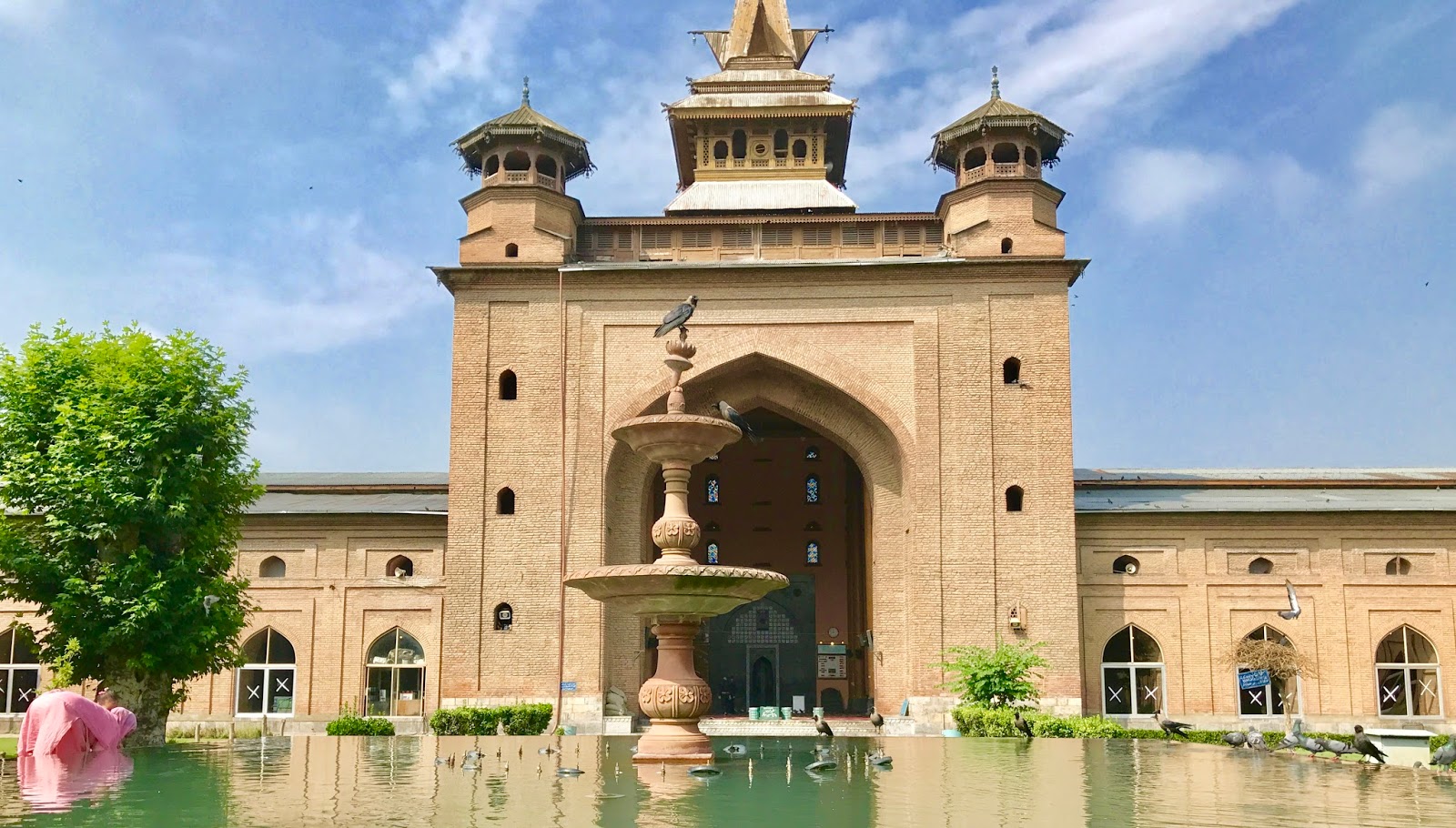
Jamia Mosque


Hyzerbat Mosque, contains a supposed hair of Muhammad, the lake shore is right on the other side of the mosque

However, Kashmir has additionally been influenced by the Arab culture that came with Islam.  It places women firmly in the private sphere of the home.  Even the dress (long skirts and sleeves for all, hijabs for many, niqabs for some) enforces that for a woman to spend time in the public realm, she loses some of her self-expression, comfort, and independence, whereas she is a lively participant in the home affairs.  This is in stark contrast to China, where women are held to just as high academic and career standards as men—or close.  And of course, China, while occasionally spiritual, does not have the omnipresent Islam that Kashmir does.  Foreign Muslims visiting Kashmir, though, are often aghast at how loosely they practice, for example not praying often and even then to saints or shrines rather than only Allah.  I love that Muslims everywhere share linguistic similarities.  Good Muslims are expected to be able to read Arabic so as to read the Qu’ran, and Arabic phrases involving Allah appear in every sentence, e.g. God forbid, thanks be to God, hallelujah, God willing.  I feel like instead of the future tense, Muslims just use the phrase Insh’allah, God willing.