Friday, July 19, 2019

Durban July


My Bloomberg friend and I caught a ride with a doctor who was going to Durban for the weekend to play volleyball.  A weekend was enough time to see everything in the city, and the best part was the WARM weather compared to Klerksdorp, especially at night.  The city was packed because of a surfing competition and the famous horse race Durban July, which involves a lot of city-wide partying and costumes.  We barely managed to get a couple beds in a hostel (on the popping Florida St).


Moses Mabhida Stadium, hosted games during the World Cup 2010

Durban Botanic Gardens


Dinky Donuts on the boardwalk 


No one knows how to swim, but everyone jumps into the waves anyways.  Only a very small slice of the beach is allowed for swimming so that the lifeguards can keep up with all the floundering swimmers.

Moses Mabhida Stadium in the distance

Sunday, July 14, 2019

South African Culture


It's been difficult to get a clear sense of South African "culture."  First and foremost, South Africans are very friendly and family-oriented.  They take the time to greet everyone always.  When picking up a call from an unknown number, they ask "How are you?" before asking "Who is this?"  I've heard theories about this cultural practice in other Sub-Saharan African countries with a history of violence between ethnic groups as part of a desire to maintain the peace.

On a city level, the culture is not very engaging for tourists.  Typical cultural activities/attractions have been hard to come by, ie sights, arts, interesting festivals, unique places to visit.  On the other hand, it should be noted that it IS winter and I'm living in a fairly rural town.  Still, we were a bit bored when in Johannesburg and later Durban each for several days.  What most locals do on the weekend is 1. braai (*the beloved SA form of barbecue, but I'll save that for another post on food), 2. drink alcohol, and 3. visit the mall.


Starting at 3:30pm on Friday, everyone races out of work.  The liquor store had a line of cars out the parking lot when we passed.  The hospital frantically tries to clear beds because weekend alcohol-related violence is so bad that "casualties" (what they call the ER) is swamped.  As one "registrar" (what they call residents) put it, people start drinking Friday night, start getting stabbed Saturday, and start realizing they've been stabbed by Sunday.

South Africa has a very high rate of violent crime.  This probably contributes to the lack of street culture because people don't walk anywhere or even exit their cars unless they are poor.  All the houses are surrounded by tall walls with barbed wire and electric gates.  Most of all, people like to talk about how unsafe it is.


The malls are just like American malls, if not more boring, but still locals refer us to them as "can't miss" attractions.  They have wifi and air conditioning and Western-style fast food restaurantsall requirements for the bourgeoise to demonstrate their status, a theory for their popularity in so many developing countries (see the book Lost in Mall: An Ethnography of Middle-Class Jakarta in the 1990s).


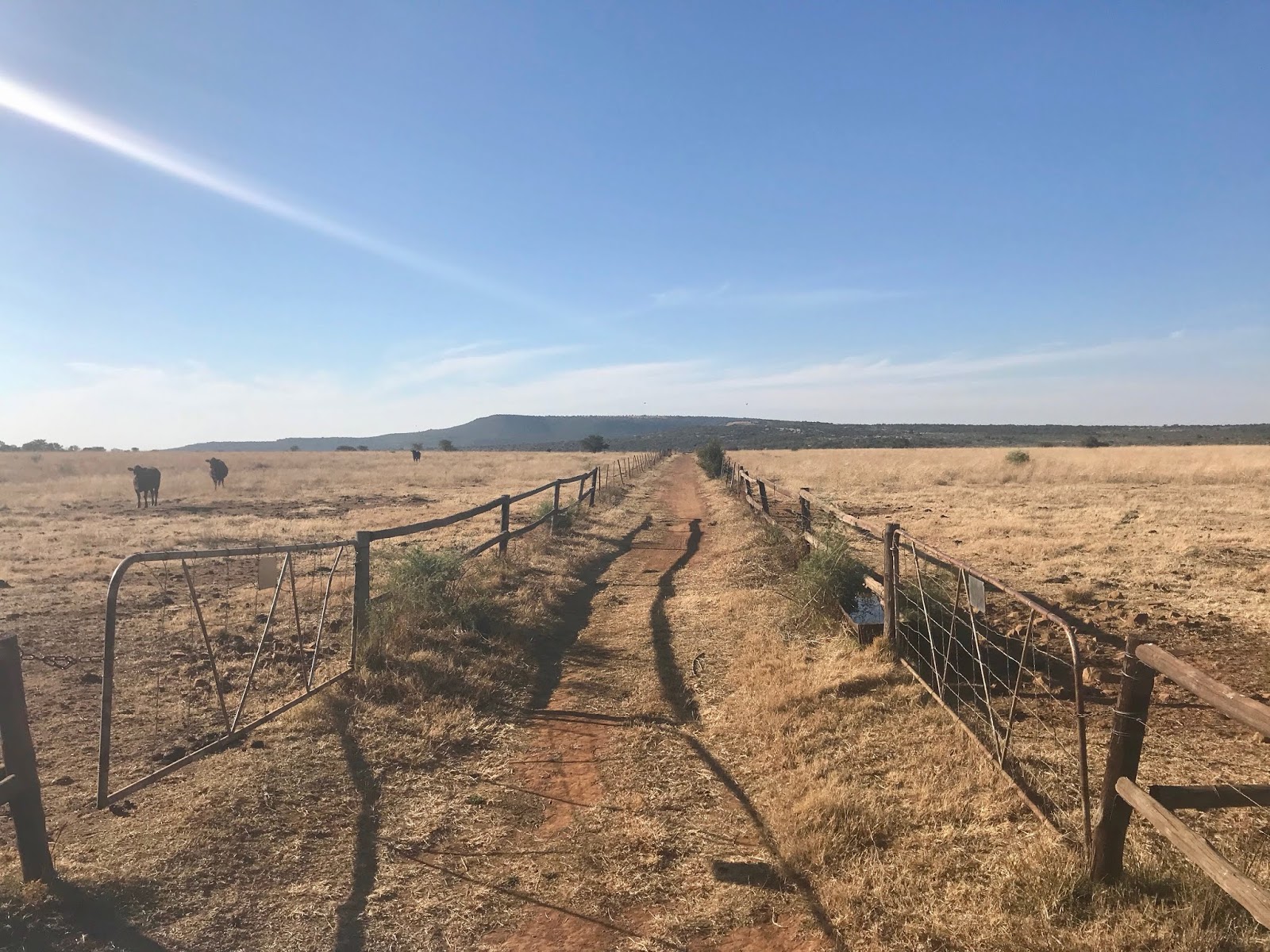
All this is not to say that South Africa doesn't have a vibrant culture in its own right.  It DOES have culture in the way that people think and view the world is unique and complex and intimately tied to the country’s history.  Identity in particular is so multi-faceted, but one Sunday a couple weeks ago we got a chance to better understand some aspects.  Through a connection at the hospital, we were invited by an old farmer couple to visit their vast land holdings where they breed race horses.  The family has owned the land since a British grandfather arrived 150 years ago and was told to ride his horse for an hour in one direction, turn 90 degrees, ride for another hour, and turn again until he made a square of land that would then be his.  He built the manor in which the family still lives.  The current farmer/horse breeder graciously drove us for a tour where we stood in the bed of his "bakkie" (what they call pick-up trucks), right behind the cab, to have a good view of the antelope, meerkats, and other animals on the plains.


The land also happened to contain a National Heritage Site of rock engravings done by Bushman people.  We had to trek through the bush and wander until we found them, as they were very understated and hidden, despite being rather famous.  The farmer relayed to us the history of the original peoples on the land.  The whole experience was incredible for better understanding South Africa.  In particular, we got an inside look into how the well-off, white, rural South African population lives.  Clearly this couple's home and history were here in Klerksdorp, and they feel very connected to South Africa.


Afterwards the couple insisted we stay for lots of tea and cookies.  Then they personally sliced us raw antelope meat, shot on their land, served with lemon and wasabi jelly.  (If you're familiar with my iron stomach, it will come as no surprise that, despite my usual vegetarianism, I was the only one to NOT get sick that night from all the carpaccio.)


As a final note on South African culture, the land itself is quite beautiful and a central part of the culture.  Every evening the whole sky is consumed by a rainbow sunset.  I've been pretty lucky in getting to travel across much of the 'Rainbow Nation' and see all the amazing landscapes.  The geography and weather are so diverse that it could be a case study in different meteorological climes.


Atop Drakensberg Mountain Range

Drakensberg Mountain Range

Ladder down the side of a cliff to climb the Drakensberg Amphitheatre

Friday, June 21, 2019

Journey to Joburg

This summer I will be doing HIV research in South Africa.  To get there as cheaply as possible, I spent about 48 hours traveling on 5 flights.  It turned out much less painful than expected.  Hydration is key.  The nicest bathroom was definitely in Rome.

Nashville
Monday 12:04pm

Newark
Monday 4:35pm

Lisbon
Tuesday 1:47am

London
Tuesday 3:02pm

Rome
Tuesday 8:47pm

Johannesburg
Wednesday 9:34am

My plane arrived the same time as that of the South Africa national soccer team coming home from Paris after the World Cup.  There were lots of people and news cameras waiting for them, singing and chanting, which was a fun welcome for me.  I waited for the rest of my team from Hopkins—two other men in my med school class and one woman getting her MPH—and then we rented a car to drive into Johannesburg.  Immediately we had to get used to driving a manual car on the left side of the road…which means hitting the windshield wipers every time instead of the turn signal.


We’re in Joburg only briefly, mainly to meet with the team at Baragwanath Hospital under whom we’ll be doing research.  Additionally, we toured the Apartheid Museum and watched the sunset from a nature reserve lookout over the city.


I’m still wrapping my mind around South Africa as a country.  Even Johannesburg feels like no city I’ve ever been.  There are parts that are so developed and Westernized, they feel like the United States.  There are parts that are so green and lush, with cool weather (it’s winter here!), that it doesn’t feel like Africa.  I look forward to exploring beyond the city.

Tuesday, June 18, 2019

Hiking Peru

On a layover in Heathrow airport so it's time to finally write a post about my spring break trip with my parents....


Cusco was a small historic city with a main cathedral and plaza nestled among mountains plastered with houses that often had rebar still jutting from the top.  There were stray dogs everywhere.

My mom, my dad, and I spent one day climbing into the hills of Cusco via cobblestone alleyways so as to see more churches and views of the city, while eating street churros and drinking pisco sour, a classic Peruvian cocktail.

We spent one night in a youth hostel with a beautiful courtyard filled with people who partied all night. (Of course I was the only one in the family to sleep wondrously.)  The next day we took a van with our team of guides across the countryside into the mountains.


Eating tamales along the way
Traditional weather vanes found atop many houses in the mountains


From there we began our seven day hike that would culminate at Machu Picchu.  The mountains were so gorgeous, and we could often see rivers below us.  On any given day we would hike downhill for a while, cross a river, scale the mountain ahead, summit, and then hike a bit downhill to our campsite.  The daily elevation change that we could see before us was sometimes disheartening but being in the zone felt amazing.  For one of the more grueling hiking days, my mom did ride (and bond with) the mule, which was following us for that purpose.  She and our guide Marcos were constantly at odds; he would tell her we were almost there and then it would take us another four hours.  Often he would say today was a flat day, but he only ever used the word in the Incan sense.  Our highpoint was 4643 meters.  The landscapes reminded me of Kashmir, which followed by the Grand Canyon are the most beautiful natural places I’d ever been before.


We stayed at the most incredible campsites, arriving in the afternoon and leaving early the next morning.  Our guides made us delicious local Peruvian cuisine, vegetarian by request.  We had soup with every meal, as well as plenty of quinoa and local produce like tomatillos and passion fruit.
 

"Incan flat"


A couple days brought brief rainstorms, and we had to hike in “poncho plastic” as Marcos called the disposable rain ponchos, which trapped heat in a very stifling way.  Eager to keep us happy, he would always tell us to “please have a rest!”.


Choquequirao--
not sure my parents pronounced this correctly once despite trying all trip

I was blown away by how uniquely strong the indigenous culture still is in Peru.  Many of our guides didn’t even speak Spanish, only Quechua.  The Incan presence felt very much alive as we hiked through extremely small mountain villages right next to ruins like the amazing Choquequirao.


We did a final surreal descent through lush terraced fields into the mountain village where our mule driver lived.  After a final night in the tent, we caught a precarious van ride to Hydroelectric.

All the drivers blasted local Wayna music, which sounds vaguely like Beijing opera, rather shrill and whine-y, but I love it.

Partway along the road of switchbacks, there was a small recent avalanche making the road impassable.  This slowed us down more than the horde of cows of the road.  Luckily, there was another van stopped going the other direction, so all the passengers got out, climbed over the debris and switched vehicles.  Little did we know, we’d soon come to a much much larger avalanche.  We had to scramble along scree for several hundred yards to get across where we waited for another van to come along.  At this point, my period started since we’d stopped hiking for a minute, and I had to put in my menstrual cup while squatting on boulders around the corner from all the construction crews surveying the avalanche.

Machu Picchu under clouds, view from Huayna Picchu

By the time we reached Machu Picchu town (via a 5 hour walk rather than pay for the train), the number of tourists was suddenly overwhelming.  The ruins were a bit underwhelming when compared to the quite mountains from which we had just emerged.  We did an extra hike up Huayna Picchu mountain to get an aerial view.
(Photo of llamas)


The alpacas of Machu Picchu

Huayna Picchu Mountain

Huayna Picchu Mountain