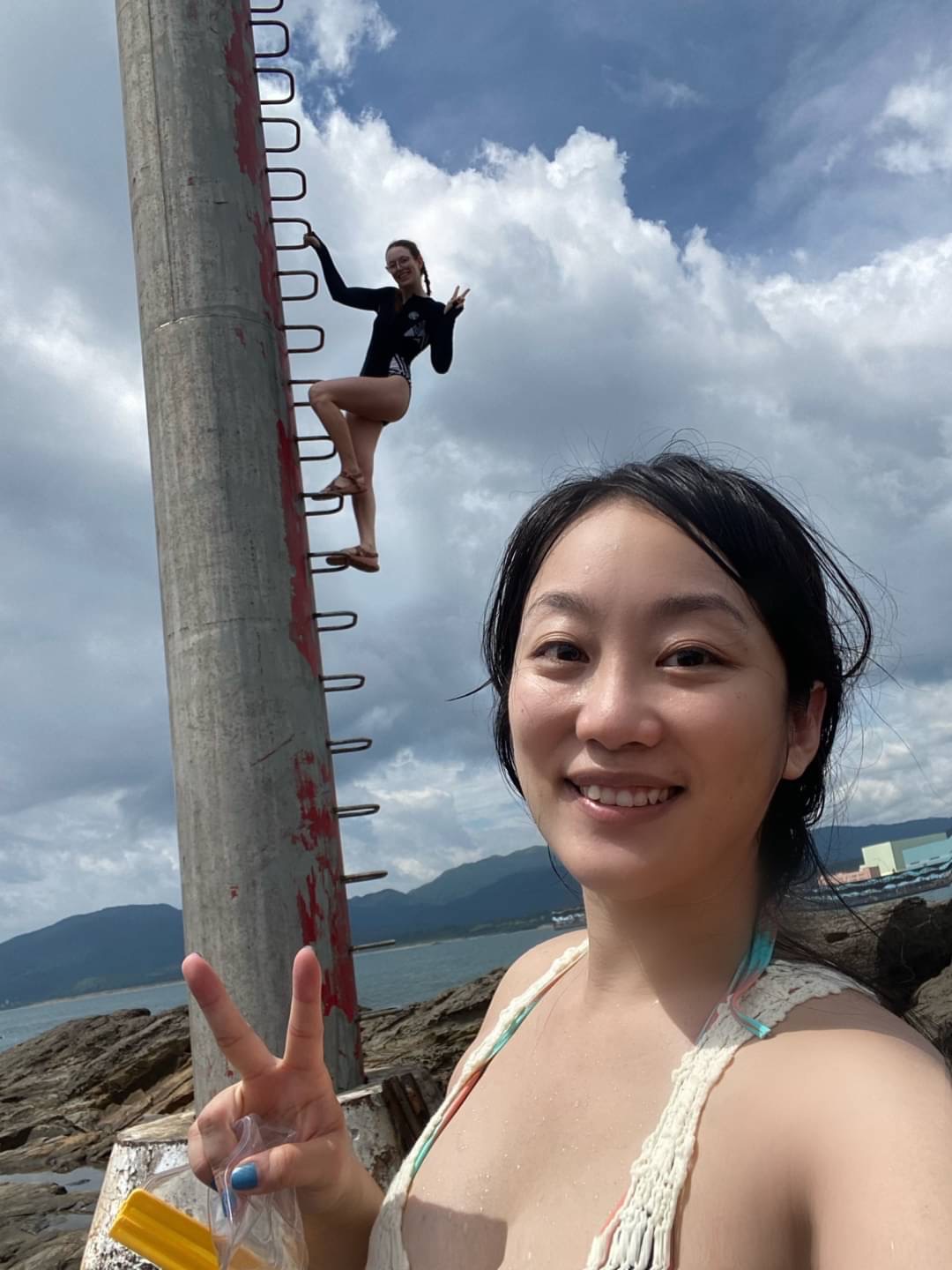
My first weekend back after COVID, I went down to 潮州 Chaozhou in 屏東縣 Pingtung County to spend time with Fulbright ETA friends who were about to leave Taiwan for the summer. Friday night, we ate an amazing feast of indigenous food at a local restaurant where my friends are regulars. It is easy to be recognized by all small restaurant owners when you're the only white person in this very remote town, teaching English at the nearby middle school. Saturday, we did a gorgeous river tracing hike to a waterfall, involving lots of rock scrambling and swimming in blue lagoons along the way. That night, they hosted a going away party at their house.
Tuesday, June 28, 2022
Sunday, June 19, 2022
COVID in Taiwan
On Saturday, some friends and I stand-up paddle boarded off the coast of Fulong to a tiny snorkeling spot called 金銀島, Treasure Island. Towards the end of the day, I thought I had thoroughly worn myself out from swimming in the ocean, but actually I had COVID!
After sleeping one night on the floor of the basement gym, and seeing a virtual doctor to get a confirmed diagnosis, I got a call the next day that a taxi driver had arrived to deliver me to my next destination.
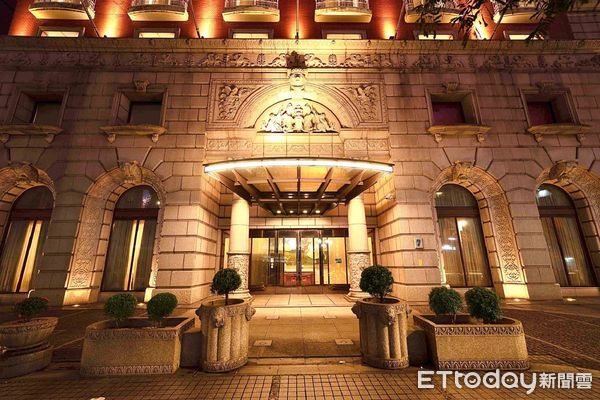
Wearing a full hazmat suit, he spritzed my entire body (and the bottom of my shoes) with hand sanitizer before I could get into the taxi parked on the side of a busy road. I had no idea where the taxi was headed until we pull up to this regal-looking hotel, called the Hamp Court Palace, or 寶璞大飯店.

I was ushered to a high-end, spacious hotel room with a bathtub and a balcony, paid for by NTU (they got bad press for having students quarantine in tents in dorm basements).
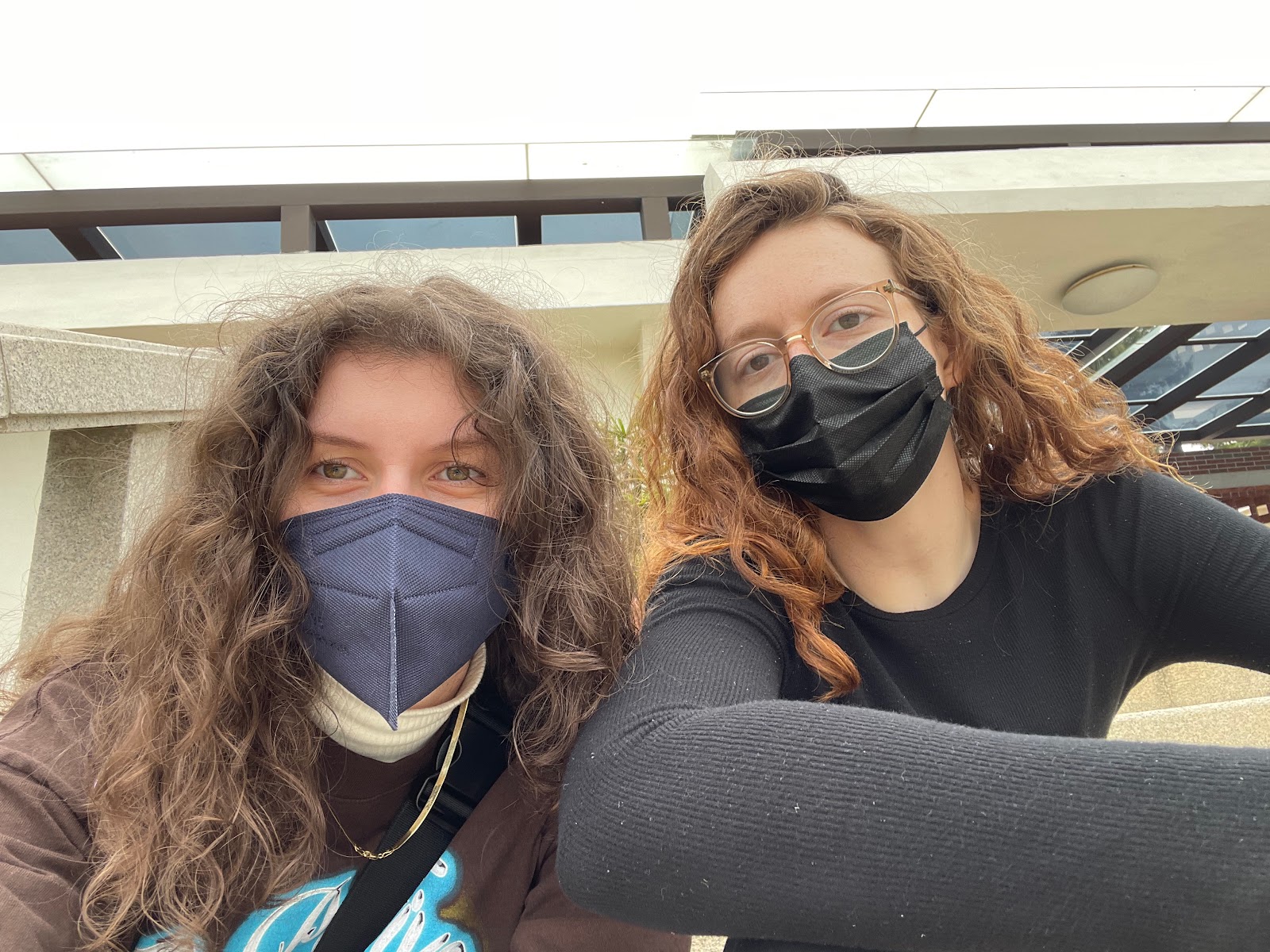
Shortly after I arrive, my randomly assigned roommate arrives--someone who got COVID on the same day and thus will be quarantined with me for the next eight. She also brings her FROG, whose name is 呱呱 guāguā (the sound frogs make in Chinese).
Most Taiwanese students go home to quarantine, but Tainan, her hometown, is very far in the south. It turns out she is a veterinary medicine major from my same school.
| The first meal delivered to us is McDonalds |
If I thought quarantine on my own was an interesting experience, then quarantine in a shared hotel room with a random Taiwanese person is a true psychological experiment. It's an economical method to create more quarantine arrangements in a city that got slammed by COVID but still wants to control the spread. In the end, I found it to be good for keeping one's spirits up and reminding us to fill it our thrice-daily symptoms and vitals chart.
My roommate turned out to be very sweet, and I'm very grateful for the constant extra Chinese practice, as well as the buddy for YouTube workouts. She hasn't figured out what "bless you" means yet (there isn't a phrase or concept in Chinese, so I've been saying it in English). She just looks at me a little confused every time I say it; I'm waiting for her to get the connection to her sneezing. She has been wearing her mask because she thinks her nose gets cold and that what makes it so runny. She asked the nurse if she was allowed to wash her hair here, because Taiwanese people think having a wet head makes you very vulnerable to sickness. Some people won't was their hair while on their period, and no one EVER leaves the house without blow-drying their hair first. While she has shampooed, conditioned, and blow-dried her hair every single evening, she has not changed her clothes at all, except to wear a special outfit to exercise in. She recommended I eat yellow kiwis and drink coconut water and Coke to feel better, even though both of our symptoms resolved completely within 36 hours.
I have learned so much COVID-related vocabulary. This whole bizarre process, involving many phone calls from the CDC, happened entirely in Chinese. Based on friends' experiences who don't speak Chinese, it was definitely smoother for it. Although being a foreign graduate student lowers the bar for every standard you have it life, it also makes hapless experiences all the more exciting.
Monday, June 6, 2022
端午節 Dragon Boat Festival
| Watching dragon boat races at 大佳 with friends |
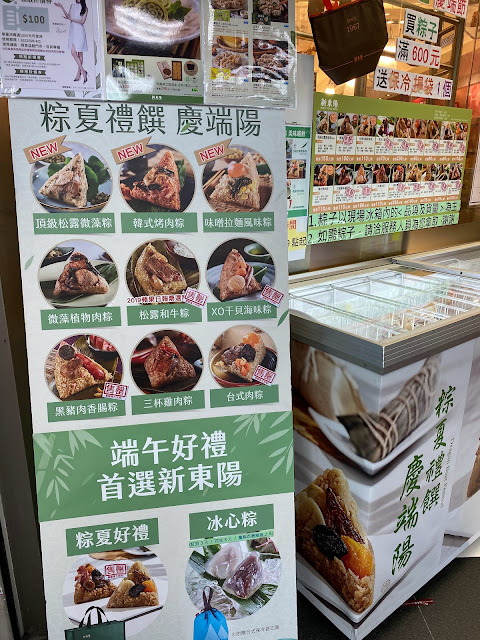
| Shop selling different flavors of zongzi |
| They are bought in bundles tied together with twine, my Taiwanese auntie kindly gave me some |
| My friend being interviewed by a Falun Gong news reporter |
| Documentary on this topic that's banned in China and Hong Kong but has been extremely popular in Taiwan |
On Sunday, I went surfing in Yilan with my Taiwanese friend and his high school friends. It was 96 degrees and sunny. We threw a football on the beach, ate yellow watermelon, drank Coronas, and played with their Samoyed. I personally drank two huge taro milk smoothies.
Monday, May 9, 2022
金門 Kinmen
| An entire military museum of enormous paintings showing how the KMT held off the PLA in Kinmen |
| 珠山 Zhushan Village, an eerie neighborhood of perfectly preserved Qing houses |
On one hand, the island feels like 17th century China, as the Qing architecture is so well preserved. On the other hand, it feels like the 1940s Chinese Civil War, as Kinmen was the heavily militarized keystone from where the Nationalists planned to retake mainland China. Defending the island from an invasion by the Chinese Communists solidified the KMT's hold over Taiwan, establishing the standoff across the strait that endures to this day.
| An military fort that can only be reached at low tide |
| Pointing to Xiamen (China) |
| Civil defense tunnels running underneath Kinmen |
The three of us stayed in the heart of Jincheng in an Airbnb that surprised us with only one bed. The next morning we had 油條 fried dough sticks, homemade by the neighbor, dipped in vermicelli noodle soup.
| Eating Kinmenese breakfast with our Airbnb host and discussing the Kinmenese identity, distinct from the Taiwanese identity |
| Western-style mansions built by Kinmenese who went elsewhere in SE Asia for work and returned with new ideas about architecture, labor, style, etc |
Saturday, April 30, 2022
Alexandra Sees Pandas in Asia
Tuesday, April 26, 2022
愛情魔鐵 Love Hotels
I've gradually become aware of the depth of cultural difference between Taiwanese and American living arrangements and how it affects interpersonal relationships. The most standard living arrangement here in Taiwan, like most of Asia, is all three generations under one roof, 三代同堂. It is extremely rare that a Taiwanese person my age, whether in grad school or working, would not be living with their parents. In fact, if an NTU student's family lives within a certain radius of the university campus, they are not provided a spot within on-campus housing, as it is assumed they will live at home.
Dormitories in Asia are radically different than the dorms in which I lived suite-style with all genders at Yale. First of all, most rooms have four people--two if you are lucky. Secondly, Asian dormitories, in line with the culture, are rather paternalistic. They are a stand-in for the Confucian order normally maintained by the family, when students are away at school.
Many have curfews at which point the doors will lock, and students have no choice but to spend all night out or to beg leniency from the nightshift guard. Some dormitories in China will turn off the electricity and Wifi at a certain hour, ostentatiously for the well-being of students who otherwise would study all night and not prioritize sleep. The undergraduate dormitories on the NTU campus are separated by gender and do not allow opposite-gender visitors. My dormitory here, which is specifically for international graduate students, separates women and men by floor. All guests must sign in and leave by 10 pm. Walking around campus in the evening, you will notice couples in the shadows near the entrances to the various dorms intimately saying goodnight. This is a phenomenon seen around Asia, such that certain campuses in China have unofficially designated make-out parks.Taipei is a highly populated city with an extremely expensive housing market renowned throughout the island. As a result, houses are nothing like those in which we live in the Midwest in the United States. Old apartment buildings shared among many families is the norm. Most have balconies, which sound luxurious but are designed for drying laundry, so Taiwanese people will never spend leisure time on their balconies. The extremely humid weather may also be to blame--similarly tragic, there is not a big alfresco dining scene in Taipei. In Taiwanese apartments, kitchens are quite small, and ovens are never seen. In contrast to Western baking, Asian breads are usually cooked via steamer. Taiwanese people infrequently cook at home, as eating from street vendors is much cheaper and a fundamental part of the culture. There is no central air nor heating, instead there are air-conditioning units mounted on the wall near the ceiling. Upon entering someone's home the first thing you'd see would be a small shoe cabinet for you to deposit yours and put on slippers to wear around inside.
I have been eager to go over Taiwanese friends' houses, whether to cook or to enjoy relaxing in a non-dormitory setting. However, since Taiwanese youth live in such small spaces with their parents and their (typically paternal) grandparents, the home is a more private place governed by family. In Confucianism, the family is governed by the father, and should not be interfered with by others. This is why the Domestic Violence Prevention Act was such a modernizing piece of legislature when it passed in Taiwan in 1998, making it the first of its kind in all of Asia.There is no concept of dinner parties here. My Taiwanese friends would rather play mahjong on the floor of my shared dorm room than host themselves. It would be like inviting your friends to come over and hang out in your parents' bedroom.
Paired with a relatively conservative sexual culture, this has created a market for love hotels across Asia. If Taiwanese people cannot host their sexual partners at their home, then a hotel that can be rented for three-hour periods is perfect. I have a Taiwanese friend who has been dating her partner for months, and still neither one has seen the other's apartment.This all felt so foreign to me coming from American dating culture, but deciphering a fundamentally new worldview is why living abroad is so dizzying, sometimes in a fun way and sometime in a I-need-to-vomit way.
These hotels also double as fun party spaces--I recently attended a couple of friends' birthday parties hosted in love hotels. There is mood lighting, jacuzzis, fancy couches, disco balls, multiple TVs, and a big round bed in the center of one of the rooms. Each hotel room has a private garage so you could enter the complex without ever having to step outside your car and risk being seen by others
| Riding the love hotel elevator |